Alegal doubletis a standardizedphraseused frequently in Englishlegal languageconsisting of two or more words that are nearsynonyms, usually connected by "and", and instandard orders, such as "cease and desist".
The doubling—and sometimes even tripling—often originates in the transition from use of one language for legal purposes to another: in Britain, from a native English term to a Latin or Law French term; in Romance-speaking countries, from Latin to the vernacular. To ensure understanding, the terms from both languages were used. This reflected the interactions between Germanic and Roman law following the decline of the Roman Empire. These phrases are often pleonasms and form irreversible binomials. It would be particularly unusual to ask someone to "desist and cease" or to protest a "seizure and search"; these common legal phrases are universally known as "cease and desist" and "search and seizure".
In language studies, a pair of words (for example,loud and clear) conventionally linked by aconjunction(usuallyand) or aprepositionis called abinomial, or a binomial pair.
When the word order of the pair is fixed, the binomial is said to be irreversible.
A similar construction involving three nouns or adjectives (bell, book, and candle; calm, cool, and collected) is called a trinomial.
Common Examples of Binomials
There are many examples of binomials in the English language. The following examples are considered irreversible binomials, because the order of each pair is fixed.
265+ Forceful Verbs to Turn You Into a Literary Tyrannosaurus
Writing is a storytelling medium. Every sentence is an opportunity to tell a part of that story, elaborating on the plot, characters, atmosphere — whatever. This also means that every time the author writes a sentence like, “Harry opened the door,” they are missing out on a key opportunity to tell us more. What if Harry “jimmied the door,” or “threw the door open”? By using forceful verbs, we get a better sense of what’s happening without many extra words.
Why should you use forceful verbs?
A lot of the time, it simply comes down to using evocative verbs: doing words that not only tell us what is happening but how it is being done as well. But wait! you say, isn’t that what adverbs are for?
Adverbs: who needs them?
Adverbs, by definition, are modifiers that writers can use to describe an action:
He walked slowly
She ate voraciously
They sleep lightly
The thing is, more often than not, you can pick a forceful verb that makes the adverb redundant:
He sauntered
She gobbled
They dozed
Apart from simply being economical with words and avoiding purple prose, however, there are plenty of sound reasons to choose stronger verbs.
Show, Don’t Tell
The granddaddy of writing aphorisms: show, don’t tell. The principle behind this is that it’s far more satisfying for readers to infer what’s happening than for every piece of information to be spoon-fed to them. But perhaps more importantly, “showing” keeps a reader under the spell of the story, while “telling” reminds them that there’s a narrator at work, spinning a tale.
By choosing a solid, evocative verb, you deliver so much more information to the reader while remaining under the radar.
Maintain immediacy and build pace
Another reason for maintaining an arsenal of forceful verbs is to preserve and build momentum. By economizing on words and packing each action with more meaning, you can up the pace of a passage. Strip out ALL the adverbs and adjectives and deploy some well-chosen verbs, and watch how your writing hums along like a cigarette boat off the coast of Miami.
This is by no means an exhaustive list. But by browsing through these hand-picked verbs, you should start to get an idea of how many words are already in your vocabulary — and how you can employ them in your writing.
Moving verbs
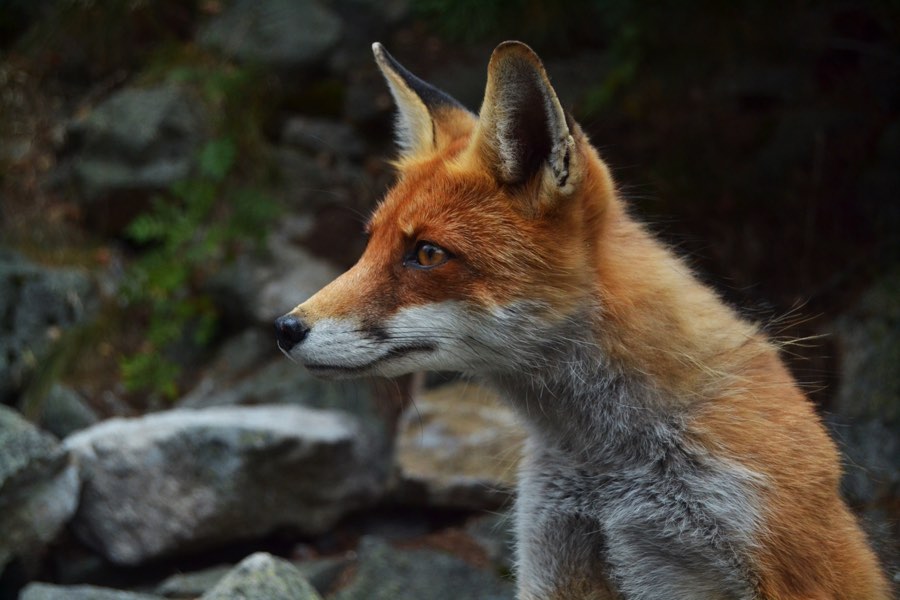
On the lookout... (Photo by Jiri Sifalda)
The quick brown fox jumped over the lazy dog.
How can a phrase with so many letters of the alphabet also be so dull? It’s a surprise that the fox didn’t fall asleep half-way through that sentence and come crashing down on the lethargic mongrel. Instead of rolling out boring words like ‘walk’ and ‘run,’ give your characters an early birthday present and spice up their motions with these verbs.
Advance
Bolt
Bound
Burst
Bus
Bust
Bustle
Charge
Clamber
Climb
Crash
Dash
Depart
Deviate
Escort
Explore
Extend
Fly
Gravitate
Hobble
Hurry
Journey
Launch
Lead
Leap
Lurch
Mount
Plunge
Race
Retreat
Revolve
Rise
Rush
Saunter
Scamper
Skip
Skulk
Slide
Slink
Slip
Sneak
Soar
Spurt
Storm
Stroll
Stumble
Surge
Tail
Toddle
Travel
Trip
Trudge
Usher
Weave
Wind
Handling verbs
"She gripped the colored pencil" (Photo by Neven Krcmarek)
Don’t have your protagonist ‘hold’ something or ‘put’ it down — that tells us nothing about the character, object, or the action. Here are some sweet alternate verbs that will pull readers into your scene about a guy with a thing in his hand:
Amend
Capture
Catch
Clasp
Clutch
Coddle
Dangle
Deposit
Drag
Drop
Ensnare
Envelop
Expose
Extract
Fling
Fondle
Fuse
Grasp
Grip
Grope
Intertwine
Peck
Pilot
Place
Pluck
Prune
Remove
Scrape
Scratch
Scrawl
Seize
Serve
Snag
Sprinkle
Steal
Steer
Strain
Stretch
Swipe
Trim
Uncover
Unpick
Untangle
Wield
Wrench
Wrest
Wring
Yank
Speaking verbs
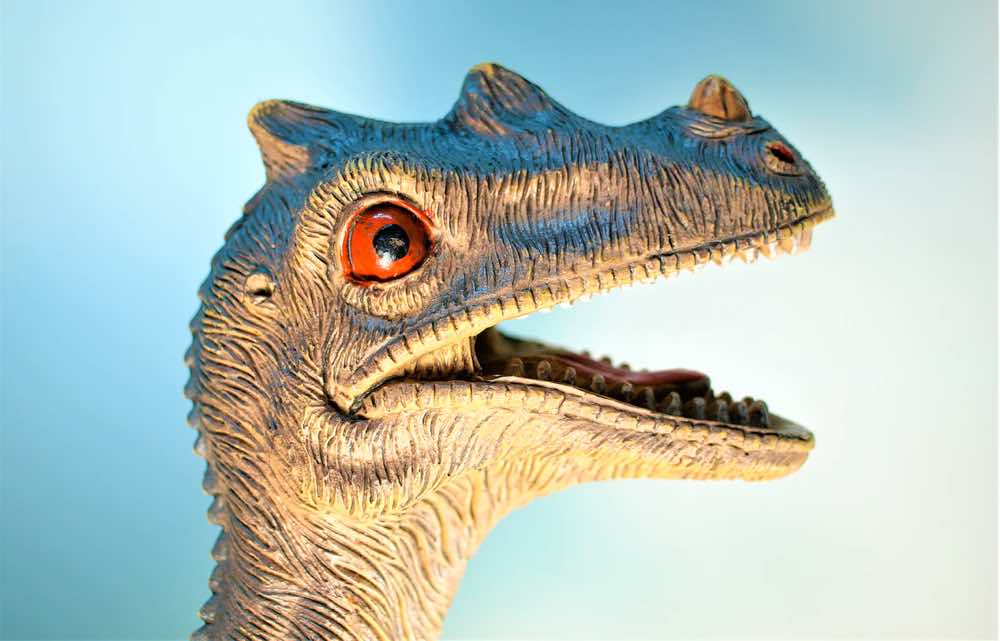
"Which way to the library?" shrieked the dinosaur. (Photo by Umanoide)
Buckle up: you’re about to get some advice that sounds contradictory, but really isn’t. The widely held rule about writing dialogue is that you shouldn’t use dialogue tags more exotic than “he said,” and “she said.” And that is true. If you tell your readers that Doctor Watson ejaculated in surprise, you’re more likely to distract your readers than if you wrote: “My word, Holmes. What a shock!” Watson said.
But, while keeping your dialogue tags unobtrusive, you don’t have to describe all acts of speech as “saying.” Here are some strong alternate verbs for characters who are flapping their lips:
Advise
Amplify
Assert
Bellow
Blab
Brief
Broadcast
Bubble
Command
Croon
Crow
Gab
Garble
Gloat
Groan
Growl
Gush
Impart
Instruct
Mimic
Moan
Muse
Notify
Recite
Report
Roar
Shriek
Snarl
Snipe
Tattle
Wail
However, if you are looking to beef up your arsenal of dialogue tags even more, why not download our free list of 150 other words for ‘said’?
Attacking verbs
Mac blasted his opponent with an overhand punch. (Photo by Hermes Rivera)
Verbs maketh the action, and nowhere is this truer than in action scenes. There’s no easier way to ruin a fight than by using the first, boring words that come to mind.
Arnold hit the other robot powerfully, who then used his .44 Magnum to shoot him back.
Boo. Hiss. Snooze. In action scenes, your job as a writer is to excite the reader — and for that, you need to quicken the pace of your writing. No time for adjectives or adverbs that lengthen sentences. Pick verbs that evoke the movements, speed, and emotions that you’re looking for. Start here:
Attack
Bash
Batter
Besiege
Blast
Bombard
Chip
Chop
Cleave
Collide
Crush
Demolish
Dismantle
Eradicate
Fight
Grapple
Hack
Lash
Quash
Raid
Ravage
Rip
Scorch
Shatter
Shock
Slash
Smash
Smite
Strike
Struggle
Tussle
Wallop
Wreck
Wrest
Wrestle
Zap
Zing
Sensing verbs
In films, a lot of storytelling is done through the close up: a wide shot of a rotting corpse cutting to a close-up of a grizzled detective squinting his eyes tells us that he’s closely scrutinizing the body and wondering what happened. However, that’s Cinema — and books are not a visual medium. Luckily, a well-deployed verb in context can imply how a character is reacting to something they’re witnessing. So take a peek at these:
Behold
Detect
Discern
Discover
Eavesdrop
Eyeball
Gawk
Gaze
Glare
Glimpse
Heed
Inspect
Locate
Notice
Peek
Peer
Perceive
Picture
Pinpoint
Probe
Realize
Regard
Scan
Scrutinize
Spy
Survey
Standing verbs
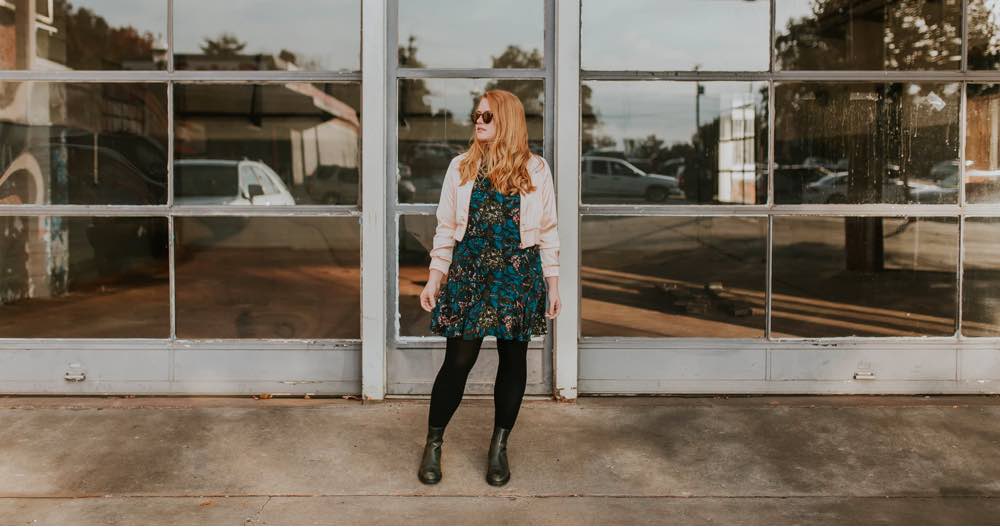
She hovered near the entrance. (Photo by Brooke Cagle)
Sure, someone might be standing on the street — but what else are they doing? You don’t have to tell us that they’re playing on the phone or thinking about their vacation, but you can give us a better picture of how they’re behaving with one of these actions:
Hold
Hover
Lean
Lurk
Park
Plant
Plop
Position
Rest
Settle
Slump
Eating verbs
The Duchess of Devonshire doesn’t dine in the same way that a soldier in the trenches scoops from his mess tin. Pick the right verbs and you'll have your readers (and characters) eating out of your hand.
Chew
Devour
Gobble
Gorge
Inhale
Munch
Pick
Slurp
Swallow
Wolf
Transforming verbs
Describing what humans are doing is a lot easier than trying to communicate something that people have never seen before. How do you paint a word-picture of a cute alien who is transmogrifying into a deadly monster? And how can you explain to people what it’s like being on the deck of an aircraft carrier, with its various moving parts? If you’re not already shouting, “Verbs! Verbs!” then you haven’t been paying attention.
Absorb
Alter
Atomize
Balloon
Demolish
Distend
Enlarge
Erase
Expand
Explode
Heighten
Intensify
Magnify
Melt
Modify
Multiply
Mushroom
Mutate
Puff
Refine
Revitalize
Revolutionize
Rust
Shrivel
Snowball
Supersize
Swell
Throb
Transfigure
Transform
Emoting verbs
So, it had come to this: paying his bills by crying for a stock photo. (Photo by Tom Pumford)
“Show, don’t tell” was made for writing about emotion. If ever you feel the urge to write, “He was very sad,” then please power down your computer and take a nap. Nobody needs to read that. Instead of telling us how a character feels, show them doing something that reveals this emotion. Why not start by checking out these evocative verbs:
Beam
Brood
Covet
Crave
Faze
Fret
Frown
Glower
Howl
Scowl
Sob
Stare
Swoon
Wail
Yowl
Shining verbs
“Don’t tell me the moon is shining,” Chekhov once wrote. “Show me the glint of the light on broken glass.” As a tip of the great Russian dramatist and short story maestro, we’ll finish up with some more alternatives for shining.
Some animal names can be directly used as verbs, meaning to act like that animal. My favorite example is "badger," which means to harass persistently, it's even possible in a courtroom to object to the opposing side's badgering. I've attempted to list all other animal names that can be used like this.
Note that this does include words like "fish" or "frog" which are animal names and also verbs meaning to hunt for that animal.
This is a difficult list to compile in any systematic way, I haven't seen a list any where else on the web. It is also somewhat subjective as to which words exactly fit the speficiation above, thus a few categories.
Definite examples
These words are the best exmaples, listed in the dictionary in both verb and noun form from one origin. Thus, they are very likely to be derived directly from the stereotypical behavior of their namesake animal.
ape
badger
buffalo
bug
bull
crab
crane
crow
cock
cuckoo
dog
fox
goose
hog
horse
hound
leech
mouse
monkey
parrot
ram
rook
skunk
snake
spider
sponge
rabbit
turtle
weasel
wolf
worm
I included "spider," even though it is not defined as a verb in the dictionary, it is commonly used as one in reference to gathering data from web pages.
I also think "turtle" is common enough as a verb meaning for a boat to flip over to go here, although it is not officially defined that way.
"Rabbit" is not in the dictionary either, I believe it is used in prison to mean "try to escape" and also in cross country running.
Examples listed with different origins
These words are listed in the dictionary with different origins for the animal and the verb, essentially meaning they are unrelated from a linguistic perspective. However, when used as verbs all of these words roughly describe recreating the animal's behavior, so they could arguably fit the criteria.
buck
duck
fawn
fly
lark
quail
raven
shark
Examples with obviously different origins
These words are listed in the dictionary with different origins for the animal and the verb, and there is not apparent connection. I could see taking "cock" off of the previous list and putting it here instead, the link between chickens and preparing guns for firing is unclear.
bat
bear
carp
cow
grouse
gull
hawk
perch
pike
rail
ray
seal
slug
sow
swallow
tick
whale
yak
"Slug" is complicated because it is defined as a verb both with and seperately from the animal. I think it belongs here because the normal verb meaning, to hit, is the unrelated one. The related one is an obscure term from typesetting.
"Sow" is even pronounced differently when used to mean "plant seeds" as opposed to "female pig," it is also on my list of heteronyms.
Examples requiring a preposition
These words qualify by having the verb form listed with the same origin as the animal, but are usually only used with a preposition.
beaver (away)
cat (around)
chicken (out)
clam (up)
ferret (out)
pig (out)
pony (up)
squirrel (away)
rat (on)
A few of these are listed in the dictionary as being British slang, like "cat around" and "beaver away" but they make sense.